
A pool that keeps losing water is more than an annoying maintenance issue. In Cairns, where tropical weather, rain, heat, and regular pool use can all affect water levels, it can be difficult to tell whether your pool is simply evaporating water or has a genuine leak.
The problem is that a leak does not always announce itself with an obvious crack or a puddle beside the pool. It may be hidden inside underground pipework, around a fitting, near the pump or filter, or somewhere beneath the waterline.
That is where professional pool leak detection makes a difference. Rather than guessing where the water is going, a trained technician can work through the pool system methodically, test different components, and narrow down the exact source before repairs begin.
For Cairns pool owners, finding the leak accurately is often the first and most important step towards preventing unnecessary water loss, equipment problems, and more expensive repairs.
Before carrying out specialist testing, the first step is understanding what is actually happening.
A pool can lose water naturally through evaporation and splash-out, particularly during hot weather. However, if the water level is falling noticeably faster than expected, or you find yourself topping up the pool far more often than usual, it is worth investigating.
Some common warning signs include:
The challenge is that these signs do not always tell you where the leak is located. Water can travel away from its original source, making a small problem appear to be somewhere completely different.
This is why professional testing is valuable. The goal is not simply to confirm that water is disappearing. The goal is to identify where it is escaping.
Professional leak detection usually involves several checks rather than a single test. The technician considers the pool, plumbing, and equipment as one connected system and works through the likely leak points.
The process often starts with a visual inspection of the pool and surrounding equipment.
Pumps, filters, pipe connections, valves, and fittings are checked for signs of moisture, damage, wear,r or anything else that could indicate water escaping from the system.
These inspections are important because not every leak is underground. A damaged fitting or worn component around the equipment area can also cause persistent water loss.
The technician may also assess the general operation of the circulation system to identify anything unusual that could help narrow down the problem.
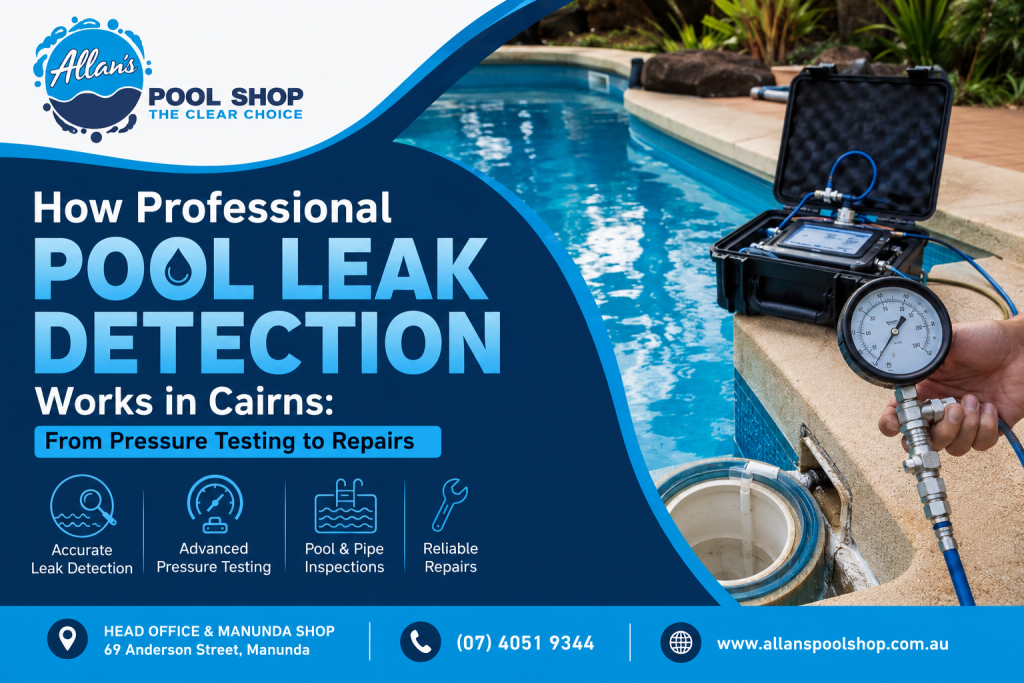
One of the most useful diagnostic methods is Pressure testing.
Pipework forms a large part of a swimming pool’s circulation system, and some sections are buried beneath paving, gardens, or other areas where access is difficult.
Pressure testing helps determine whether a section of pipework is maintaining the expected pressure. If pressure drops when it should remain stable, that can indicate a leak within the plumbing system.
The important point is that this process helps narrow the search before excavation or repair work begins. Instead of disturbing large areas of landscaping and hoping the problem is found, technicians can use testing to focus attention on the most likely section.
Dye testing can be useful when investigating suspected leaks around fittings, cracks, or other areas within the pool.
A small amount of specialised dye is introduced near a suspected leak point. If the dye is drawn towards the suspected opening, it can help identify the direction of water movement.
This method can be particularly useful when a leak is difficult to see with the naked eye. It provides another piece of evidence that can help the technician work out exactly where water is escaping.
The pool’s equipment area deserves close attention because seals, connections,s and fittings can deteriorate over time.
Technicians may inspect the pump, filter, valves, pipe joints,ts and other components for signs of leaks or faults. A problem in this area can affect water levels and, if left unresolved, may also contribute to equipment damage.
A thorough inspection helps separate a plumbing leak from an equipment-related issue, which means the repair can be directed at the actual cause rather than treating symptoms.
Some leaks cannot be confirmed from outside the pool.
When necessary, underwater inspection equipment, including SCUBA equipment, can be used to investigate areas beneath the waterline. This may help technicians examine fittings, pool surfaces,s and other difficult-to-access locations.
The purpose is simple: find the source without relying on guesswork.
Finding a leak is only half the job. Finding it accurately before starting repairs can save time, reduce disruption, and help prevent the problem from becoming more expensive.
Imagine discovering that your pool is losing water and immediately digging around the surrounding area because you suspect a broken pipe. If the actual problem is a damaged fitting inside the pool, that unnecessary work could mean extra labour, disruption and expense.
Accurate diagnosis changes the approach.
Once the source has been identified, the appropriate pool repairs can be planned. Depending on the issue, this may involve pipe or plumbing repairs, pump or filter repairs, equipment troubleshooting, or replacing worn or damaged components.
Professional leak detection can also help protect the rest of the pool system.
A persistent leak may mean the pump is working harder than necessary, while continually replacing lost water can increase chemical use. Water escaping into surrounding areas may also contribute to problems around the pool over time.
In other words, a small leak can become a bigger maintenance problem when it is ignored.
Cairns pool owners deal with conditions that can make water loss harder to judge. Hot weather, humidity, heavy rainfall,l and regular swimming activity can all change the amount of water in a pool.
That makes it tempting to dismiss a falling water level as normal evaporation.
However, a persistent or unusual drop should not simply be ignored.
Early investigation gives you a better chance of identifying the source before the problem causes further damage. It also means you can make an informed decision about the repair rather than repeatedly topping up the pool and hoping the issue disappears.
For homeowners, that can mean less wasted water and fewer unexpected maintenance costs. For businesses, holiday accommodation providers,rs and commercial properties, it can also help reduce disruption and keep pool facilities operating properly.
When your pool is losing water, the best solution is not always more water. It is about finding out where the missing water is going.
Professional testing can identify problems that are difficult to see during a normal pool inspection, from underground pipework to equipment fittings and underwater leak points. Once the source is confirmed, the right repair can be carried out with far less guesswork.
Allan’s Pool Shop provides professional leak detection and repair services for pool owners across Cairns, using methods such as pipework pressure testing, leak detection dyes, equipment inspections and underwater inspections when required.
If you have noticed unexplained water loss or suspect something is not right with your pool, now is a good time to investigate rather than wait for the problem to become more serious. Visit the leak detection and repair service page or use the Contact US option to take the next step.
A pool may have a leak if its water level is dropping faster than normal, you are frequently topping up the water, you notice wet areas around the equipment or pool, or you see air entering the circulation system. Professional testing can help confirm whether the water loss is caused by a leak rather than normal evaporation.
Pressure testing checks whether sections of the pool’s pipework can maintain pressure. A pressure loss can indicate a problem within the plumbing system and help technicians narrow down where further investigation is needed.
Locating the exact source first helps ensure that the repair addresses the actual problem. This can reduce unnecessary digging or replacement work, minimise disruption and help prevent ongoing water loss and equipment issues.