
A pool can look clean and inviting while problems are quietly developing beneath the surface. Water may appear crystal clear, yet the chemical balance could be off, the pump may be working harder than it should, or the filtration system may be struggling to keep up.
For Cairns pool owners, regular maintenance is particularly important. The region’s warm, humid, and tropical conditions can place additional demands on pool water and equipment throughout the year. Small issues can quickly become bigger and more expensive problems if they are overlooked.
That is where a professional pool health check can make a real difference.
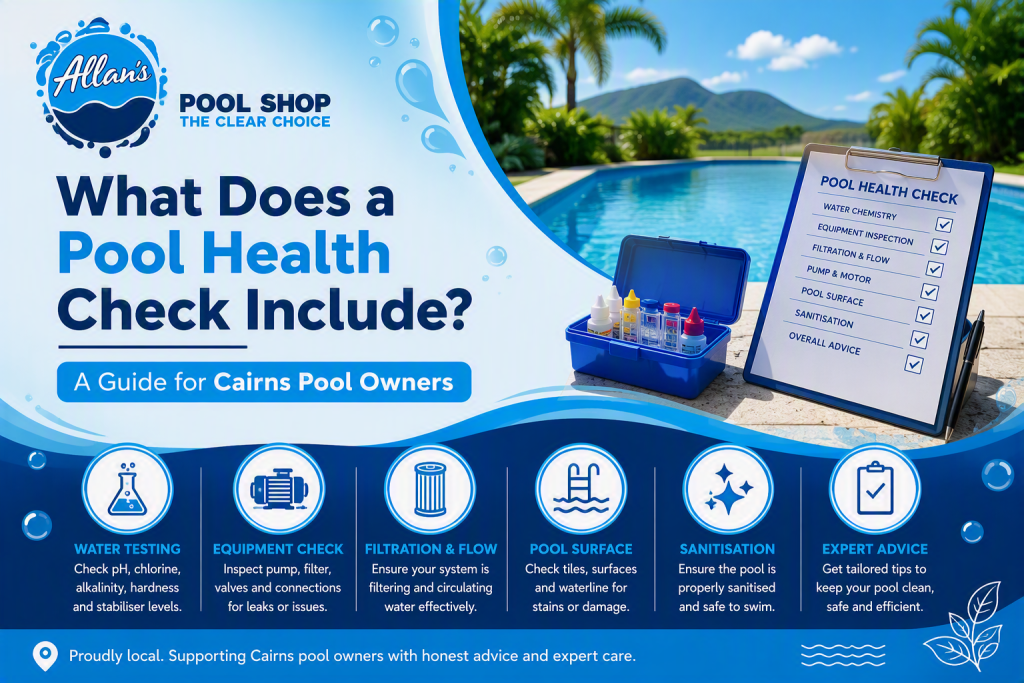
A pool health check is more than simply testing the water. It provides an overall look at the condition of your pool, its water quality, and the equipment responsible for keeping everything running properly.
A proper pool health check looks at several important areas rather than focusing on just one problem. The aim is to identify existing issues, spot early warning signs, and give you a clearer understanding of what your pool needs.
Water quality is one of the first things to assess because balanced water is essential for a clean, comfortable, and well-maintained pool.
Professional pool water testing services in Cairns can assess important water parameters and identify whether adjustments are required. Depending on the condition of the pool, testing may help identify issues associated with:
Incorrect chemical levels can affect more than just how the water feels. Poorly balanced water may contribute to equipment issues, surface problems, scaling, or ineffective sanitisation.
Testing gives you a clearer picture of what is actually happening in the water instead of relying on appearance alone.
Your pool equipment works behind the scenes every day, so it is important to know whether each component is operating correctly.
A pool equipment inspection can involve checking key equipment such as the pump, filter, and associated components. The inspection can help identify signs of wear, poor performance, unusual operation, or potential faults.
A professional assessment may look for things such as:
Finding these signs early can help prevent a minor equipment concern from turning into a major interruption to your pool use.
The pool pump is an important part of the circulation system. It moves water through the filtration system and helps distribute treated water throughout the pool.
If circulation is poor, the pool may become harder to keep clean and properly sanitised.
During a health check, the pump can be assessed for signs that it is not operating as expected. Reduced flow, unusual sounds, or other performance concerns may indicate that further attention is required.
Good circulation supports the wider pool maintenance system, making the pump an important part of any comprehensive assessment.
The filter plays a major role in removing unwanted particles from pool water. If it is dirty, damaged, or not functioning properly, water quality can suffer.
A health check can help determine whether the filtration system is performing effectively and whether maintenance, cleaning, or further attention may be required.
This is particularly useful when you notice that your pool water is becoming cloudy despite regular cleaning and chemical treatment.
Rather than repeatedly adding chemicals and hoping the problem disappears, checking the filtration system can help identify whether there is an underlying equipment issue.
It is easy to think that a pool only needs attention when the water turns green, becomes cloudy, or equipment stops working. In reality, waiting for a noticeable problem can sometimes mean the issue has already developed considerably.
Regular health checks provide several practical benefits.
Early identification is one of the biggest advantages of a professional inspection. A small pump issue, filtration concern, or water imbalance may be easier to address than a major equipment failure or serious water quality problem.
Balanced water is more comfortable for swimmers and easier to maintain. A professional assessment can help you understand what your pool water needs rather than relying on guesswork.
Poor water chemistry and equipment problems can affect the wider pool system. Regular checks can help identify concerns before they place unnecessary strain on pumps, filters, and other components.
If you are constantly adjusting chemicals, cleaning the pool, or trying to work out why the water is not staying clear, there may be an underlying issue.
A health check can help identify where the problem is coming from, giving you a more practical starting point for ongoing maintenance.
For homeowners, a pool is meant to be enjoyed, not constantly worried about. Knowing that the water and essential equipment have been assessed can make routine pool care much less stressful.
This is also valuable for businesses, resorts, and commercial properties where maintaining a clean and healthy swimming environment is an important part of daily operations.
There is no need to wait until your pool develops a serious problem before arranging an assessment.
A health check may be worth considering if:
For Cairns pool owners, regular attention can be particularly useful because local weather and environmental conditions can influence pool maintenance requirements.
A health check should not simply leave you with a list of problems. The real value comes from understanding what those findings mean and what should be done next.
Depending on the results, you may receive recommendations on water treatment, equipment maintenance, repairs, or potential replacements.
Not every issue needs an immediate replacement. Sometimes a component simply requires cleaning, servicing, or adjustment. In other situations, replacing an ageing or inefficient component may make more sense in the long term.
The important thing is having the condition of your pool assessed so you can make an informed decision rather than reacting when something eventually fails.
With experience in professional pool care across Cairns and Far North Queensland, Allan’s Pool Shop helps homeowners, businesses, resorts, and commercial properties understand what their pools need to remain clean, healthy, and ready to use.
If you are unsure about the condition of your pool water or equipment, a professional assessment can provide a useful starting point.
Take the next step towards better pool care by arranging a health check with Allan’s Pool Shop. Visit the website to learn more about the service or use the Contact Us option to speak with the team about your pool requirements.
A pool health check can include water analysis, checking chemical balance, inspecting the pump and filtration equipment, assessing circulation, and identifying potential maintenance, repair, or replacement requirements.
The ideal frequency depends on factors such as pool usage, equipment condition, water quality, and local environmental conditions. Regular checks can help identify developing problems before they become more serious.
Yes. A professional assessment can help identify signs of poor pump performance, filtration issues, leaks, unusual equipment operation, and other concerns that may require maintenance, repair, or replacement.